What Is a TRON Address and How Does It Work
A TRON address is a public identifier derived from a private key using cryptographic hashing. Every TRON address starts with the letter T and contains 34 alphanumeric characters. When someone sends you TRX or USDT on the Tron network, they use your TRON address as the destination. The address itself is public—anyone can see transaction history linked to it on the Tron blockchain explorer—but only the holder of the corresponding private key can move funds from that address. TRON addresses are case-sensitive and must be entered exactly as written to ensure funds arrive at the correct destination. Unlike traditional bank accounts, TRON addresses are pseudonymous; they do not inherently reveal the owner's identity, though transaction patterns and exchange records can sometimes link an address to a real person.
How to Check a TRON Address for Risk and Compliance
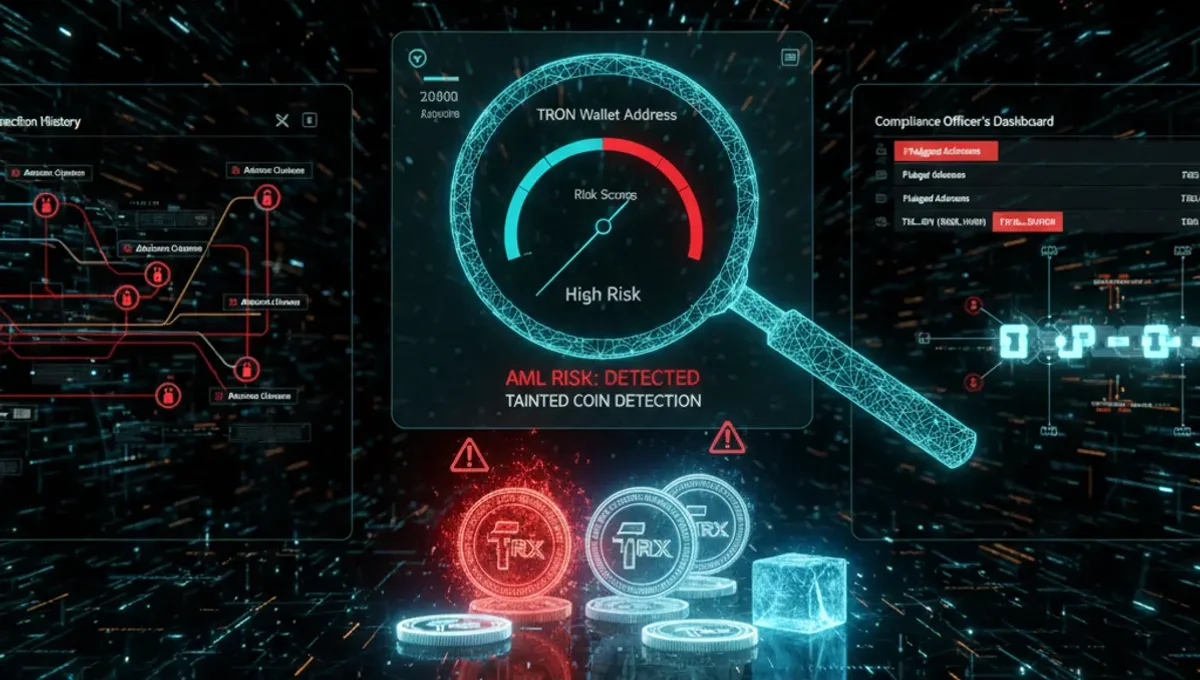
Checking a TRON address before receiving funds is a practical step to avoid tainted coins and compliance issues. Start by using a TRON address checker to examine the wallet's transaction history and risk profile. Most AML services scan a TRON address against known risk indicators: darknet market involvement, mixer usage, sanctions lists, stolen funds, and gambling platforms. To check a TRON address:
- Copy the 34-character TRON address (starting with T) from the sender.
- Paste it into a TRON address lookup tool or AML screening service.
- Review the risk score and flagged categories (if any).
- Check the transaction history on a TRON blockchain explorer to see fund flows.
- Decide whether the risk level is acceptable for your use case.
Our curated list of verified AML services on the AML Services page offers trusted options for screening TRON addresses with detailed risk reporting. These services provide AML risk scores, tainted coin detection, and darknet exposure analysis specific to Tron wallets.
Understanding TRON Address Risk Scores and What They Mean
An AML risk score for a TRON address is a numerical rating that reflects the likelihood of compliance or regulatory concern. Risk scores typically range from 0 (very low risk) to 100 (very high risk), though scoring systems vary by service. A low risk score (0–20) suggests the address has clean transaction history with no known darknet, mixer, or sanctions involvement. A medium risk score (21–50) may indicate some exposure to higher-risk activities or unconfirmed associations. A high risk score (51–100) signals direct or strong indirect links to darknet markets, stolen funds, sanctions entities, or other red flags. When checking a TRON address, interpret the score in context: a medium score does not automatically mean the funds are unusable, but it warrants further investigation. Exchanges and institutional users often set acceptable risk thresholds; many will not accept deposits from addresses scoring above 50 or 60. Understanding these thresholds helps you decide whether to proceed with a transaction.
Common Risk Flags Found in TRON Address Checks
When you check a TRON address, several risk categories may appear in the report. Darknet exposure indicates the address has received or sent funds to known darknet marketplace wallets. Mixer involvement means the address interacted with coin mixing or tumbling services, which obscure transaction origins. Sanctions flags show the address matches or has transacted with entities on government sanctions lists. Stolen funds indicate the address received cryptocurrency reported as stolen in known theft incidents. Gambling exposure suggests the address has transacted with gambling platforms, which may carry regulatory risk depending on jurisdiction. Scam or fraud flags mean the address is linked to known scams or fraudulent schemes. Each flag represents a different compliance concern; some are more serious than others. For instance, sanctions involvement typically triggers automatic account freezes at exchanges, while gambling exposure may only concern certain regulated institutions. Reviewing the specific flags helps you understand the actual risk rather than relying on the score alone.
How to Check a TRON Wallet Address Before Receiving USDT or TRX
Before accepting a transfer of USDT or TRX, verify the sender's TRON address to avoid receiving tainted coins that could freeze your exchange account. Follow these steps:
- Ask the sender for their TRON address and confirm it matches the payment instruction.
- Use a TRON address checker to scan the wallet for AML risk flags.
- Review the risk score and any flagged categories (darknet, mixers, sanctions, stolen funds).
- Check the address on a TRON blockchain explorer (such as Tronscan) to see recent transaction activity and volume.
- If the risk score is within your acceptable threshold (typically under 30–50 depending on your compliance requirements), proceed.
- If the score is high or flags are concerning, ask the sender for clarification or decline the transaction.
This process takes minutes and can prevent you from receiving coins that exchanges later freeze or that trigger compliance investigations. Many institutional and regulated users set a policy to reject any TRON address with a risk score above a specific threshold. Establishing your own threshold before you receive funds ensures consistent, defensible decision-making.
TRON Address Lookup vs. TRON Address Checker: What Is the Difference
A TRON address lookup typically refers to viewing basic transaction history and balance information on a blockchain explorer like Tronscan. You enter the address and see all past transactions, current holdings, and token transfers. A TRON address checker, by contrast, is an AML or compliance tool that analyzes the address against risk databases and provides a risk score, compliance flags, and detailed reports on darknet exposure, sanctions involvement, and other red flags. A lookup answers 'what has this address done,' while a checker answers 'is this address safe to transact with.' For compliance purposes, a TRON address checker is more useful because it contextualizes transaction history within known risk categories. If you only use a lookup, you see the transactions but may not recognize patterns linked to darknet markets or stolen funds. Using both together—first checking the address for risk, then reviewing the transaction history on an explorer—gives you the most complete picture before accepting funds.
What Happens If You Receive Tainted Coins at Your TRON Address
If you receive tainted coins—funds flagged as stolen, from darknet sources, or sanctioned entities—at your TRON address, several consequences may follow. If you deposit those coins into an exchange account, the exchange's AML monitoring may flag the transaction and freeze your account pending investigation. Exchanges are required by law to screen deposits and can hold or reject funds linked to high-risk sources. You may be asked to provide proof of the legitimate source of the funds. In severe cases (such as sanctions involvement), your account may be permanently closed and funds forfeited. To avoid this, check the TRON address of any sender before accepting a transfer, especially for large amounts. If you accidentally receive tainted coins, do not immediately move them to an exchange; instead, contact the exchange's compliance team to report the situation and ask for guidance. Proactive disclosure often results in better outcomes than having the exchange discover the issue during automated monitoring. Using verified AML services listed on our AML Services page to screen addresses before accepting transfers is the most effective way to prevent this scenario.
Frequently asked questions
How do I know if a TRON address is real or fake
A real TRON address always starts with the letter T and contains exactly 34 alphanumeric characters. You can verify it by pasting it into a TRON blockchain explorer like Tronscan; if the address exists, it will show transaction history and balance. Fake addresses either do not start with T, have incorrect length, or return no results on the explorer. Always copy addresses directly from official sources rather than typing them manually to avoid typos.
Can I see who owns a TRON address
TRON addresses are pseudonymous, so the blockchain itself does not reveal the owner's identity. However, if the address has interacted with exchanges or services that require identity verification, that information may be available to law enforcement or through blockchain analysis. You can see all transactions linked to an address on the blockchain explorer, but not the person behind it unless they have publicly disclosed their address.
What does a high risk score mean for a TRON address
A high risk score (typically 51–100) indicates the address has links to darknet markets, mixers, stolen funds, sanctions entities, or other compliance concerns. Exchanges often freeze deposits from high-risk addresses. Before accepting funds from a high-risk address, contact the sender to understand why the score is elevated. If you cannot get a satisfactory explanation, it is safer to decline the transaction.
Is it safe to send USDT to a TRON address I have not checked
Sending USDT to an unchecked TRON address carries risk if the address is inactive, incorrect, or controlled by a scammer. Always verify the address is correct and belongs to the intended recipient. For large amounts, check the address using an AML service first to ensure it is not linked to darknet or sanctions activity. This prevents your USDT from being lost or frozen by exchanges.
How often should I check a TRON address for AML risk
Check a TRON address before every transaction, especially if you have not interacted with that address recently. Risk profiles can change as new transactions occur and new data is added to AML databases. For ongoing business relationships, check the address periodically (monthly or quarterly) to ensure the risk profile has not deteriorated. This is standard practice for regulated institutions and protects you from receiving tainted coins.