How Blockchain Transactions Become Traceable
Every transaction on a public blockchain creates an immutable record that includes the sender's address, recipient's address, amount transferred, timestamp, and transaction hash. This data is stored across thousands of nodes and cannot be altered retroactively. Blockchain analysis firms use this transparency to map transaction flows, identify patterns, and trace funds across multiple addresses and exchanges. When you receive USDT or TRX, the transaction history of those coins is permanently visible. Exchanges and wallet providers use this traceability to perform AML checks and detect whether incoming funds have been associated with darknet markets, mixers, scams, or sanctioned entities. The public nature of blockchain ledgers means that any address can be scrutinized by law enforcement, compliance teams, or third-party analytics platforms.
What Is KYT (Know Your Transaction) and How Does It Work
KYT is a compliance process that monitors and analyzes individual transactions in real time to assess their risk profile. Unlike KYC (Know Your Customer), which verifies identity at account opening, KYT focuses on transaction behavior and fund origins. KYT tools scan incoming and outgoing transactions against databases of known high-risk addresses, including those linked to mixers, darknet markets, stolen funds, and sanctioned entities. When you receive crypto, a KYT check can flag whether those coins have been mixed, routed through gambling platforms, or previously involved in fraud. Exchanges and custodians use KYT to decide whether to accept a deposit or freeze an account. The risk score assigned by KYT analysis determines whether a transaction is allowed, delayed for manual review, or rejected entirely. This process helps prevent money laundering and sanctions violations.
Can Crypto Transactions Be Traced Through Mixers and Privacy Tools
Mixers and privacy-focused tools attempt to obscure transaction trails by combining funds from multiple users and redistributing them, but they do not guarantee anonymity. Blockchain analysis firms have developed heuristics to identify mixer usage patterns and link inputs to outputs with varying degrees of confidence. Transactions that pass through mixers are flagged as higher-risk by AML systems because the obfuscation itself signals potential compliance concerns. Law enforcement and compliance teams treat mixer usage as a red flag, even if the underlying transaction was legitimate. Privacy coins like Monero use cryptographic techniques to hide sender, recipient, and amount, but most exchanges delist or heavily restrict these assets due to regulatory pressure. For practical purposes, assume that any transaction on a major blockchain can be traced through blockchain analysis, and that attempts to hide transaction history will trigger AML alerts and potential account freezes.
How AML Checks Detect Tainted and Dirty Crypto
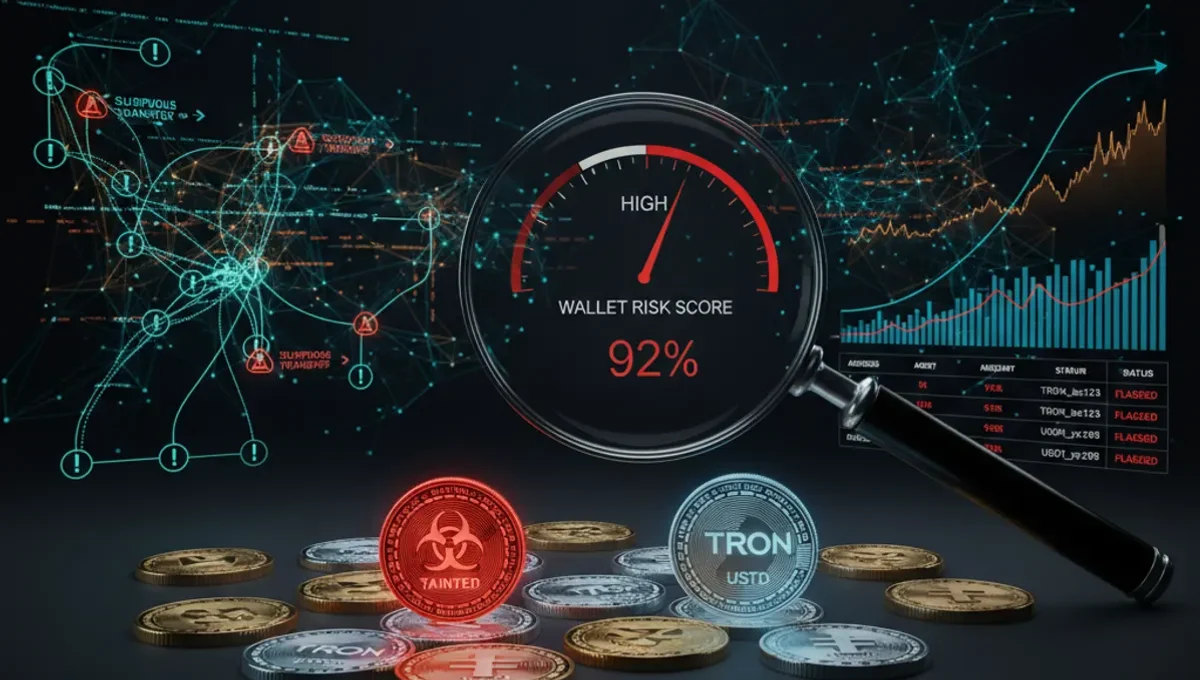
An AML check scans a wallet address against multiple data sources to determine if the coins have been associated with illicit activity. These sources include transaction history analysis, known darknet market addresses, stolen fund databases, sanctions lists, and mixer detection algorithms. When you check a crypto address using an AML service, the system assigns a risk score based on factors such as: transaction frequency and patterns, association with known high-risk entities, involvement in scams or theft, connection to gambling or darknet platforms, and compliance with sanctions regulations. A low risk score indicates clean coins with minimal suspicious history. A high risk score means the coins may be frozen by exchanges, rejected by payment processors, or flagged for manual compliance review. Exchanges use these AML risk assessments to decide whether to credit deposits, and they may permanently ban accounts that repeatedly receive flagged funds.
What Happens When Your Crypto Is Flagged as Tainted
If your coins are flagged as tainted or high-risk during an AML check, several outcomes are possible. First, an exchange may delay crediting your deposit while compliance staff manually review the transaction history. Second, the exchange may reject the deposit entirely and return the funds to your sending address. Third, if coins are already in your exchange account, the platform may freeze the funds pending investigation. In severe cases, the exchange may close your account and report the activity to financial authorities. Frozen USDT or other stablecoins can remain locked indefinitely if the compliance review concludes the funds are connected to sanctions, theft, or money laundering. To avoid this situation, verify the source of any crypto before receiving it, and use a trusted AML check service to screen wallet addresses before accepting large transfers. Our curated list of verified AML services on this site provides a safe starting point for wallet screening before any transaction.
How to Check if a Crypto Address Is Traceable and Safe
Before receiving USDT, TRX, BTC, or ETH, perform an AML check on the sending address to assess its risk profile. Step 1: Obtain the sender's wallet address. Step 2: Visit a trusted AML check service (our site maintains a curated list of verified providers). Step 3: Enter the address and select the blockchain (Tron, Bitcoin, Ethereum, etc.). Step 4: Review the risk score and transaction history report. Step 5: Look for red flags such as mixer usage, darknet associations, or sanctions list matches. Step 6: Assess whether the risk level is acceptable for your use case. A risk score below 30 is typically considered low-risk; scores above 70 warrant caution. If the address shows high-risk indicators, ask the sender for clarification or decline the transaction. This proactive screening prevents you from receiving frozen or flagged coins that could lock your exchange account or trigger compliance investigations.
Why Exchanges Freeze Accounts and How Traceability Plays a Role
Exchanges freeze accounts when they detect deposits from high-risk addresses or patterns consistent with money laundering, sanctions violations, or theft. Because all blockchain transactions are traceable, exchanges can audit the entire transaction history of any deposit. If an incoming transfer is linked to a darknet market, mixer, or sanctioned entity, the exchange's compliance system automatically flags it. Once flagged, the exchange may freeze not only that deposit but also any funds already in the account until the compliance team investigates. This freeze can last days, weeks, or indefinitely. In some cases, exchanges permanently ban users who repeatedly receive tainted coins, even if the user was unaware of the coins' origin. The traceability of blockchain transactions means that exchanges have full visibility into fund sources, and they use this visibility to enforce strict compliance policies. Understanding this risk is essential for anyone receiving crypto payments or transfers.
Frequently asked questions
Can police trace crypto transactions
Yes. Law enforcement agencies work with blockchain analysis firms to trace transactions on public blockchains. Every transaction leaves a permanent record that can be analyzed to identify patterns, link addresses to exchanges, and eventually connect to real-world identities. Mixers and privacy tools slow this process but do not prevent it. Exchanges are required to comply with law enforcement requests for transaction data.
How do exchanges know if crypto is stolen
Exchanges use AML and KYT tools that compare incoming addresses against databases of known theft victims, darknet markets, and sanctioned entities. Blockchain analysis firms maintain these databases by tracking stolen funds across transactions. When a deposit matches a known theft address, the exchange flags it and may freeze the account. Stolen coins are traceable because the theft is typically reported and added to compliance watchlists.
What does a high AML risk score mean for my wallet
A high AML risk score (typically above 70) indicates your wallet address has been associated with suspicious activity such as mixer usage, darknet transactions, or sanctions violations. Exchanges may reject deposits from your address, freeze your account, or ban you entirely. Even if you received the coins legitimately, the coins themselves may be flagged as tainted, making them difficult or impossible to deposit on regulated platforms.
Is Bitcoin more traceable than other cryptocurrencies
Bitcoin transactions are fully traceable on the public ledger, just like Ethereum, Tron, and most other cryptocurrencies. Bitcoin does not offer privacy by default. Privacy coins like Monero use encryption to hide transaction details, but most exchanges delist them due to regulatory concerns. For practical purposes, assume all major blockchain transactions are traceable through analysis tools.
Can I receive crypto from a mixer without consequences
Receiving crypto from a mixer is high-risk. Exchanges flag mixer-linked addresses as suspicious, and deposits from these addresses may be rejected or frozen. Even if the original transaction was legitimate, the mixer usage itself triggers AML alerts. Compliance teams treat mixer involvement as a red flag for potential money laundering, regardless of the actual source of funds. Avoid receiving coins from mixer addresses.