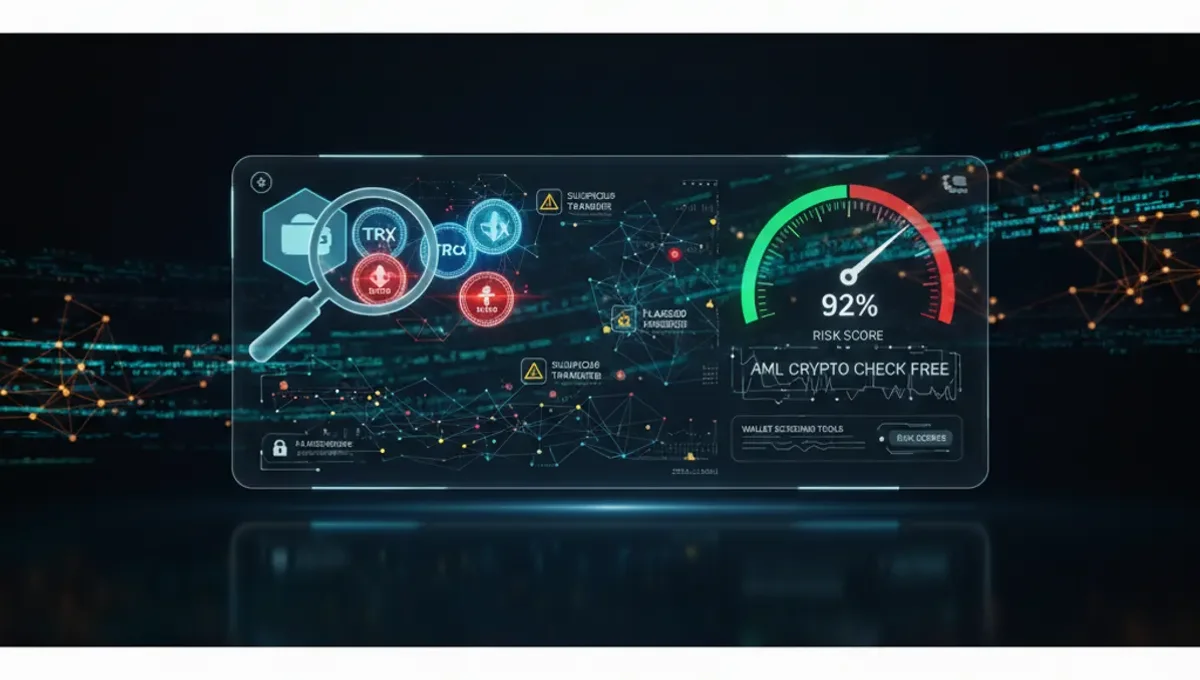
What Is an AML Crypto Check and Why It Matters
An AML (Anti-Money Laundering) crypto check is a blockchain screening tool that analyzes a wallet address and flags risk factors tied to its transaction history. When you receive cryptocurrency, the coins themselves carry a history—if they've passed through mixers, darknet markets, or sanctioned entities, exchanges and compliance systems may freeze them or block your account.
AML checks matter because:
- Exchanges freeze accounts holding tainted USDT or BTC without warning.
- Receiving stolen or sanctioned funds can expose you to legal liability.
- Risk scores help you decide whether to accept a payment before it's too late.
- Darknet exposure and mixer involvement are red flags that trigger compliance holds.
A free AML crypto check gives you this visibility without cost, letting you screen addresses before committing to a transaction. The check examines the wallet's entire transaction chain, not just the current balance.
How AML Scoring Works for Crypto Wallets
AML scoring assigns a numerical risk rating to a wallet based on its transaction history and associations. The scoring model typically ranges from low (clean history) to high (significant compliance risk).
Key factors in AML wallet scoring:
- Mixer involvement: Coins routed through privacy mixers increase risk because they obscure transaction origin.
- Darknet market links: Wallets receiving funds from known darknet addresses are flagged immediately.
- Sanctions exposure: Addresses matching OFAC or other sanctions lists trigger maximum risk scores.
- Stolen fund history: Coins traced back to exchange hacks or theft incidents carry elevated risk.
- Gambling and scam associations: Wallets linked to Ponzi schemes or illegal gambling platforms show moderate to high risk.
- Transaction velocity: Rapid fund movement or unusual patterns may indicate money laundering.
Most free AML crypto checks display a risk score (often 0–100 or low/medium/high) and list specific risk categories detected. A score of 0–20 typically indicates clean history; 21–50 suggests caution; 51+ means significant compliance concerns. The exact thresholds vary by service, so always review the detailed findings, not just the number.
How to Run a Free AML Crypto Wallet Check
Running a free AML crypto check takes seconds and requires only the wallet address. Here's the step-by-step process:
- Copy the wallet address: Obtain the full TRX, USDT, BTC, or ETH address from the sender or payment request.
- Visit an AML check service: Use a trusted blockchain analytics platform offering free screening (many services provide limited free checks or freemium tiers).
- Paste the address: Enter the wallet address into the search field.
- Review the risk report: The tool scans the blockchain and returns a risk score, flagged categories, and transaction history summary.
- Check for red flags: Look for mixer involvement, darknet exposure, sanctions matches, or stolen fund alerts.
- Decide: Accept the payment if risk is acceptable, or request funds from a different address.
For ongoing or high-volume screening, explore the curated list of verified AML services on our AML Services page—many offer free trials or tiered pricing for regular wallet checks. This ensures you're using tools with proven blockchain data accuracy and compliance credibility.
Understanding AML Risk Score Levels and What They Mean
Risk score interpretation varies by platform, but most follow a similar framework:
Low Risk (0–20): Clean transaction history, no mixer or darknet exposure, no sanctions matches. Safe to accept in most cases.
Medium Risk (21–50): Minor flags such as old mixer involvement, indirect darknet exposure, or unconfirmed associations. Acceptable if you trust the sender and understand the context.
High Risk (51–75): Direct mixer usage, recent darknet links, or multiple risk categories. Proceed with caution; verify the sender's legitimacy before accepting.
Critical Risk (76–100): Sanctions matches, stolen fund alerts, active darknet associations, or scam involvement. Do not accept without legal or compliance review.
Context matters: a wallet with one old mixer transaction years ago may score higher than its actual risk warrants. Conversely, a wallet with no obvious flags but recent rapid movement to multiple exchanges might warrant deeper investigation. Always read the detailed findings alongside the score. If you're unsure, request payment from a different address or escalate to your compliance team.
What to Do If Your Coins Are Flagged as Tainted or Dirty
If an AML check reveals your coins are flagged as tainted (linked to mixers, darknet, theft, or sanctions), your options depend on the severity and your jurisdiction:
Immediate steps:
- Do not deposit into an exchange immediately—exchanges scan deposits and may freeze your account.
- Document the transaction: Record the sender's address, timestamp, and your reason for accepting the payment.
- Verify the sender: Confirm whether the sender knowingly sent tainted funds or if the flag is a false positive.
- Consult compliance or legal counsel: If the flag involves sanctions or stolen funds, seek professional advice before moving the coins.
Longer-term options:
- Wait for age: Some exchanges apply reduced scrutiny to older transactions; however, this is not guaranteed.
- Request replacement: Ask the sender to resend funds from a clean address.
- Use a compliant service: Some platforms specialize in handling flagged assets; check our AML Services page for options.
- Report to authorities: If you received stolen funds unknowingly, reporting to law enforcement may protect you legally.
Tainted coins can trigger account freezes, transaction blocks, or account closure without warning. Prevention (screening before accepting) is far easier than remediation.
Free vs. Paid AML Crypto Check Services: What's the Difference
Free AML crypto checks offer basic screening; paid services provide deeper analysis and higher query limits.
Free AML checks typically include:
- Single wallet address screening.
- Risk score and basic category flags (mixer, darknet, sanctions).
- Limited transaction history detail.
- No API access or bulk screening.
- Monthly or daily query limits.
Paid AML services typically add:
- Unlimited wallet checks and bulk screening.
- Detailed transaction graphs and fund flow analysis.
- Real-time monitoring and alerts.
- API integration for automated compliance workflows.
- Historical data and advanced filtering.
- Priority support and compliance reporting.
For occasional checks (a few wallets per month), free AML crypto checks are sufficient. For businesses, traders, or compliance teams handling regular transactions, paid services justify the cost through automation and deeper insights. Our curated AML Services page lists both free and premium options with transparent pricing and feature comparisons, helping you choose based on your screening volume and risk tolerance.
Acceptable Risk Thresholds and Best Practices
Determining an acceptable AML risk threshold depends on your use case, jurisdiction, and risk appetite.
For personal users:
- Accept scores 0–20 without hesitation.
- Investigate scores 21–50 if you know the sender; decline if unknown.
- Reject scores 51+ unless you have explicit legal or compliance clearance.
For businesses and exchanges:
- Enforce a maximum threshold (often 30–50) and reject higher-risk wallets automatically.
- Document all screening decisions for audit trails.
- Escalate borderline cases to compliance officers.
- Use real-time monitoring for ongoing transaction oversight.
Best practices to avoid tainted coins:
- Screen before accepting: Run every unknown sender's address through a free AML crypto check.
- Request clean addresses: If a wallet flags as risky, ask the sender to use a different address.
- Verify payment context: Confirm the transaction reason matches the sender's profile.
- Monitor deposits: After receiving funds, watch for exchange holds or account restrictions.
- Use compliant services: Deposit only through exchanges and platforms with active AML compliance programs.
A few seconds of screening prevents weeks of frozen accounts and compliance headaches. Make AML checking a routine step in your payment workflow.
Frequently asked questions
Is there a truly free AML crypto check with no limits?
Most services offer free single-address checks but impose monthly query limits (typically 5–10 per month). Unlimited free screening is rare; most platforms use a freemium model. For high-volume checking, paid tiers are necessary. Check our AML Services page for current free options and their limits.
Can I check a TRX or USDT address for free on Telegram?
Some Telegram bots offer AML crypto check free queries, but accuracy and data freshness vary widely. Official blockchain analytics platforms are more reliable. Avoid bots requesting private keys or seed phrases. Always verify results with a trusted service from our curated AML Services list.
What does a high AML risk score mean for my USDT?
A high AML risk score (51+) indicates your USDT is linked to mixers, darknet markets, theft, or sanctions. Exchanges may freeze your account or reject deposits. Do not deposit into regulated exchanges without understanding the flag. Consult compliance counsel if the score involves sanctions or stolen funds.
How accurate are free AML crypto checks?
Free tools use public blockchain data and known risk databases, so accuracy depends on data freshness and the service's analytics model. Paid services typically offer higher accuracy due to proprietary data and real-time updates. Always cross-check critical findings with multiple sources or professional compliance advisors.
Can I dispute or appeal an AML risk score on my wallet?
Disputing depends on the service and the reason for the flag. If the flag is incorrect (false positive), contact the AML service's support team with evidence. If the flag is accurate (e.g., mixer involvement), you cannot dispute it; instead, request funds from a clean address or consult a compliance attorney.