What Does a Tron Address Check Reveal
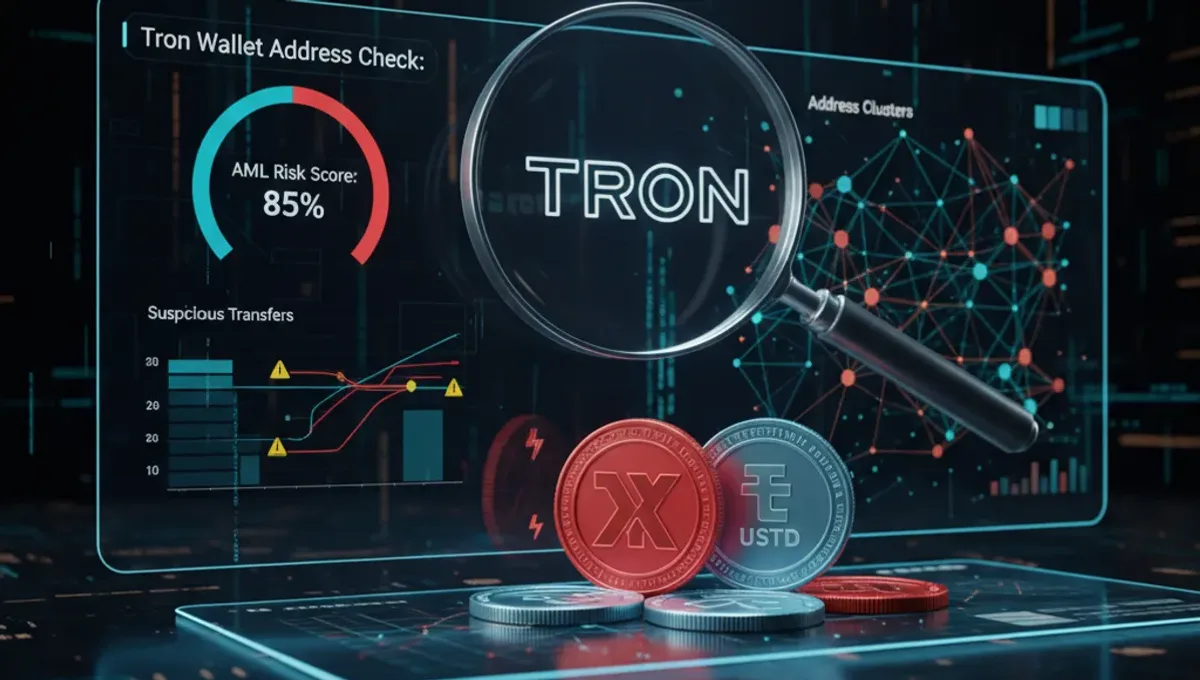
A Tron address check examines the wallet's on-chain activity and flags exposure to known risk categories. The scan looks for connections to mixers (services that obscure transaction trails), darknet markets, scams, stolen funds, sanctioned entities, and gambling platforms. The result is a risk score—typically ranging from low to critical—that reflects the likelihood the address has received or sent illicit or high-risk funds. When you check a Tron wallet address, you're essentially asking: has this wallet touched money that could cause compliance problems for me. TRC20 tokens like USDT are particularly important to verify because stablecoins are heavily monitored by exchanges and regulators.
How to Check Tron Wallet Address in Steps
Follow these steps to check a Tron address:
- Obtain the full Tron address (begins with T, 34 characters long).
- Visit a verified AML check service from our curated list of trusted providers on the AML Services page.
- Paste the address into the search field.
- Review the risk score and detailed findings (mixer exposure, darknet links, transaction patterns).
- Check the transaction history summary to see if funds flowed through high-risk intermediaries.
- Note any sanctions list matches or stolen fund flags.
- Decide whether the risk level is acceptable for your use case.
Most services return results within seconds. Some also show the wallet's balance and recent transaction volume, which helps you assess overall activity patterns.
Understanding Tron Address Risk Scores
Risk scores typically fall into four bands:
- Low (0–20): Clean wallet with minimal or no exposure to known risk sources. Safe to receive funds.
- Medium (21–50): Some exposure to mixers or unconfirmed risk markers, but no direct darknet or sanctions links. Acceptable for most use cases, though monitor further activity.
- High (51–80): Significant mixer exposure, gambling platform connections, or scam associations. Proceed with caution; many exchanges flag these for manual review.
- Critical (81–100): Darknet market links, stolen funds, sanctioned entity exposure, or active fraud markers. Most exchanges will freeze or reject these wallets.
Your acceptable threshold depends on your compliance posture. Retail users often accept medium risk; institutional buyers and exchanges typically reject anything above low-to-medium.
Why Check Tron Wallet Address Before Receiving Funds
Exchanges and custodians monitor incoming and outgoing transactions. If you receive USDT or TRX from a flagged address, your own account may be frozen pending investigation, even if you didn't know the source was problematic. This is called guilt by association in compliance terms. Checking a Tron wallet address before accepting a transfer lets you:
- Avoid receiving stolen or sanctioned funds.
- Prevent your exchange account from being locked.
- Reduce the risk of your own funds being seized or delayed.
- Maintain a clean transaction history for future compliance audits.
A single high-risk inbound transfer can trigger a chain reaction: your exchange flags your account, requests proof of funds source, and may freeze your balance for weeks. Checking the sender's address first is a simple preventive step.
Common Tron Address Risk Flags Explained
When you check a Tron address, watch for these red flags:
- Mixer exposure: Funds passed through privacy mixers, indicating deliberate obfuscation.
- Darknet market links: Address received or sent funds to known dark web marketplaces.
- Stolen funds marker: Coins traced back to exchange hacks or wallet theft.
- Sanctions list match: Address linked to individuals or entities on OFAC or other sanctions lists.
- Gambling platform activity: High-volume transfers to or from gambling sites (regulatory risk).
- Scam association: Address flagged in fraud reports or phishing campaigns.
- Rapid churn: Extremely high transaction frequency with minimal holding periods, suggesting layering or money laundering.
Not all flags mean the address is malicious—some may reflect legitimate privacy practices—but they warrant investigation before you commit funds.
What to Do If Your Tron Address Is Flagged as High Risk
If you check a Tron wallet address and it shows high or critical risk:
- Do not send funds to that address unless you have verified the owner's identity and reason for the risk score.
- If you already received funds from a flagged address, document the transaction and notify your exchange's compliance team proactively.
- Request a manual review from the exchange; some flags are false positives or outdated.
- If the address belongs to you, review your transaction history to identify which activity triggered the flag (mixer use, gambling, etc.).
- Consider moving funds through a clean address if the risk is due to historical activity you no longer control.
- For institutional accounts, consult your compliance officer before proceeding.
Being transparent with your exchange about flagged activity is better than having them discover it during a routine audit.
Choosing a Trusted Service to Check Tron Addresses
Not all AML check services are equal. When selecting a tool to check Tron wallet addresses, verify that the service:
- Covers TRC20 tokens and Tron-specific risk markers.
- Updates its darknet and mixer databases regularly.
- Provides detailed transaction history, not just a score.
- Offers transparent methodology (explains how risk is calculated).
- Complies with data privacy regulations (does not sell your query data).
- Integrates with major exchanges for real-time screening.
Our curated list of verified AML services on the AML Services page includes providers that meet these standards. Starting with a trusted service ensures you're getting accurate, up-to-date risk assessments rather than relying on outdated or incomplete data.
Frequently asked questions
How do I check if a Tron address is safe
Use an AML check service to scan the address against darknet, mixer, and sanctions databases. Paste the Tron address into the tool and review the risk score and transaction history. A low score (0–20) indicates minimal risk; high scores (51+) suggest exposure to illicit activity or compliance concerns. Check before sending or receiving funds.
What does a Tron address check cost
Many AML services offer free basic checks with limited detail, while premium reports cost between a few dollars and tens of dollars per address depending on depth. Some services charge per query; others offer subscription plans. Compare options on our AML Services page to find pricing that fits your needs.
Can I check a Tron wallet balance without an AML check
Yes, you can view a Tron wallet's balance and transaction history directly on the Tron blockchain explorer (Tronscan) without an AML check. However, an AML check adds risk assessment by cross-referencing the address against darknet, mixer, and sanctions databases—information the explorer alone does not provide.
What happens if I receive USDT from a flagged Tron address
Your exchange may flag your account for manual review or freeze it pending investigation. Compliance teams monitor inbound transfers from high-risk addresses. Notify your exchange proactively with transaction details and proof of the source. Transparency reduces the likelihood of prolonged account suspension.
How often should I check Tron addresses for AML risk
Check any address before you receive or send significant funds. For ongoing business relationships, periodic rescans (monthly or quarterly) help catch new risk markers that emerge over time. One-time checks are sufficient for casual transfers; high-volume traders benefit from continuous monitoring.