What Is a Crypto AML Check and Why It Matters
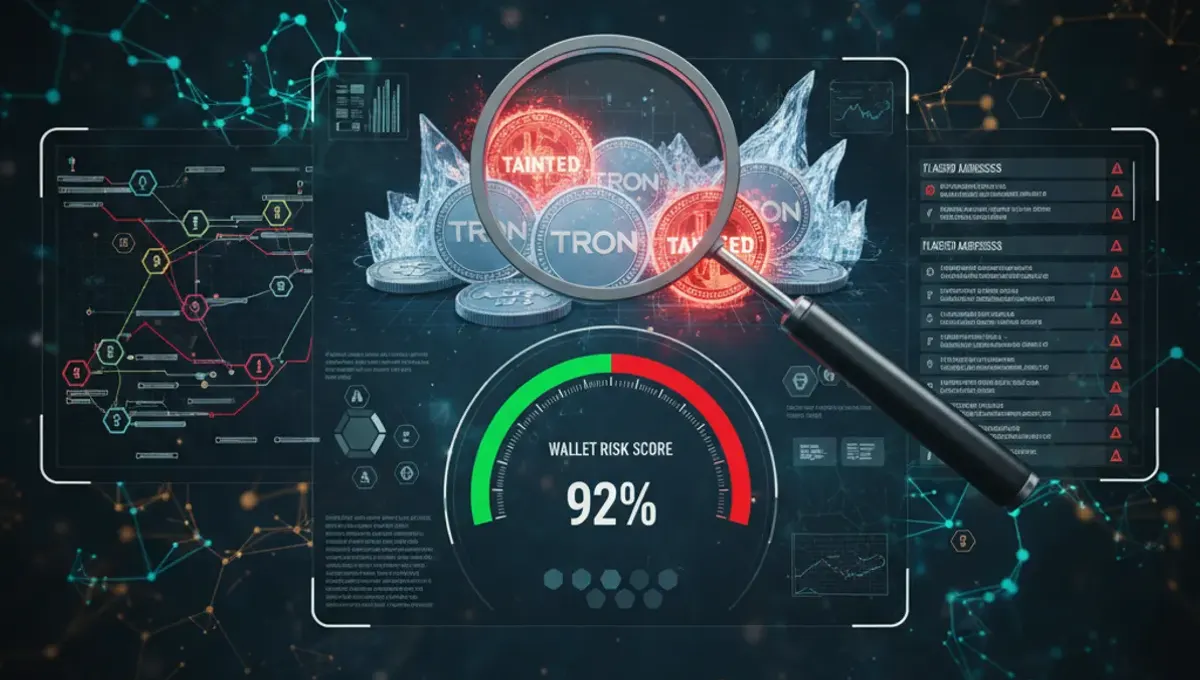
An AML check crypto service analyzes blockchain transactions to assign a risk score to any wallet address. The check examines whether funds have passed through mixers, darknet markets, or known theft addresses. Banks and exchanges use anti-money laundering rules to block accounts that hold flagged coins. When you receive USDT or TRX from an unknown sender, an online AML crypto check tells you if those coins carry compliance risk. A single transaction from a mixer or sanctioned entity can taint an entire wallet, triggering frozen accounts or forced liquidations at major exchanges. This is why checking before you accept payment is critical.
How AML Risk Scoring Works for Crypto Wallets
An AML check crypto wallet assigns a numerical risk score based on transaction history. Most services use a scale from 0 (clean) to 100 (high risk). The scoring algorithm flags addresses that have interacted with known bad actors: darknet marketplaces, ransomware wallets, Ponzi schemes, gambling platforms, and OFAC-sanctioned entities. Each interaction adds risk points. A wallet that received funds directly from a mixer gets a higher score than one with a single suspicious hop in its history. The risk score also considers the age of the wallet, transaction frequency, and whether it has been publicly identified in law enforcement reports. Services then categorize scores into bands: green (low risk, under 20), yellow (medium risk, 20–60), and red (high risk, above 60).
How to Check a Crypto Address for AML Risk Online
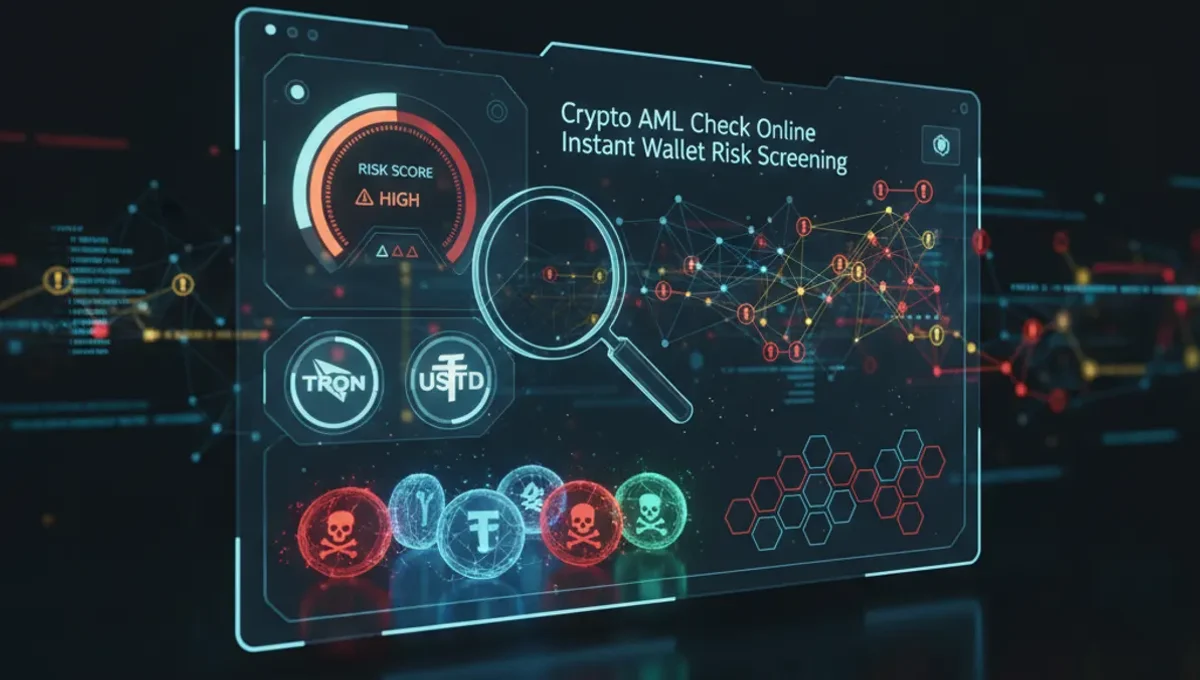
Running a free AML crypto check online follows a simple workflow. First, copy the wallet address you want to screen—BTC, USDT (ERC-20 or TRC-20), TRX, or ETH. Paste it into the search field on a trusted AML screening service. The tool queries blockchain data and compliance databases in real time. Within seconds, you receive a risk score and a breakdown of flagged transactions. The report shows which darknet markets, mixers, or sanctioned entities the wallet has touched. Most services display the transaction path so you can see exactly how the coins moved. If the score is green or low yellow, the coins are safe to accept. If the score is red or high yellow, you should decline the payment or investigate further before accepting.
Understanding Risk Score Levels and What They Mean
Risk scores fall into three main categories. A low-risk score (0–20) means the wallet has a clean history with no known links to illegal activity or sanctions. These coins are safe to hold and trade on any exchange. A medium-risk score (20–60) indicates the wallet has interacted with services like mixers or gambling platforms, but no direct theft or sanctions exposure. Exchanges may allow these coins but may flag the account for review. A high-risk score (60–100) signals direct exposure to darknet markets, ransomware, stolen funds, or OFAC sanctions. Holding these coins risks account freezes, forced liquidation, or legal complications. If you receive a payment with a high-risk score, reject it immediately. If your own wallet accumulates a high score, move clean coins to a new address before trading on regulated exchanges.
What Happens When Your Wallet Is Flagged as High Risk
If an AML check crypto wallet reveals a high-risk score, exchanges and custodians respond quickly. Most major platforms freeze accounts holding flagged USDT or BTC within hours of deposit. Your funds are locked pending manual review, which can take days or weeks. In some cases, exchanges permanently close accounts and require you to prove the coins were received in error. If the coins are linked to sanctions or ransomware, they may be seized by law enforcement. To recover, you must document the source of the funds and prove you had no knowledge of their illicit history. The best defense is to check addresses before accepting payment. If you already hold flagged coins, move them to a new wallet immediately and do not deposit them on regulated exchanges. Some services allow you to file a dispute if the score is incorrect.
Comparing Free vs. Paid AML Check Services
Free AML crypto check tools offer basic screening: a risk score and a short transaction history. These are sufficient for most users checking a single address before accepting payment. Paid services add deeper analysis: full transaction graphs, custom watchlists, API access for bulk screening, and priority support. Enterprises and compliance teams use paid plans to monitor multiple wallets continuously. For individual users, a free AML check crypto wallet service is usually enough. However, if you trade frequently or manage large amounts, a paid subscription provides faster results and more detailed reports. The most reliable approach is to use a verified service from a curated list of trusted AML providers—this ensures your data is handled securely and the screening is accurate. Check our AML Services page for a list of vetted tools that offer both free and paid options.
Best Practices: Avoiding Tainted Coins and Protecting Your Account
Protect yourself by running an AML crypto check before accepting any large payment. Request the sender's wallet address in advance and screen it. If the score is yellow or red, ask the sender to explain the history or decline the payment. When you trade, use a dedicated wallet for each counterparty to isolate risk. Never mix coins from unknown sources with your main holdings. If you run a business, screen all incoming USDT and BTC payments automatically. Keep records of all AML checks you perform—exchanges may ask for proof that you screened funds. If you receive coins from a legitimate source but the AML check flags them, contact the sender and ask them to move the coins through a clean wallet first. Finally, use only regulated exchanges that perform their own AML checks; this adds a second layer of protection and reduces your personal liability.
Frequently asked questions
Is a free AML crypto check safe to use?
Yes, reputable free AML check services are safe. They use the same blockchain data as paid tools but with fewer features. Always use a verified service from a trusted provider list to ensure your data is not sold or misused. Check our AML Services page for recommended free options.
Can I check a USDT address for AML risk online?
Yes. USDT exists on multiple blockchains: Ethereum (ERC-20), Tron (TRC-20), and others. Paste the USDT wallet address into an AML check tool and it will scan the transaction history for that specific chain. The risk score reflects all activity on that blockchain.
What does a high AML risk score mean for my BTC wallet?
A high risk score (60+) means your BTC wallet has interacted with darknet markets, mixers, ransomware, or sanctioned entities. Exchanges will likely freeze your account if you deposit these coins. Do not send high-risk BTC to regulated platforms; move it to a new clean wallet instead.
How long does an online AML crypto check take?
Most AML checks complete in seconds to a few minutes. The tool queries blockchain data and compliance databases in real time. Results appear instantly on your screen with a risk score and transaction breakdown.
Can I dispute an incorrect AML check result?
Yes. If you believe your wallet was flagged incorrectly, contact the AML service provider with documentation of the transaction source. Reputable services review disputes and may adjust your score. Keep records of all payments you receive to support your case.