What Are the Main Types of Sanctions Screening?
Sanctions screening in crypto falls into three primary categories. Entity screening checks whether a wallet owner or counterparty is listed on government sanctions lists. Transaction screening monitors individual transfers to detect if funds flow to or from flagged addresses. Ongoing transaction monitoring tracks wallet activity over time to catch delayed or indirect sanctions violations. OFAC sanctions screening requirements mandate that financial institutions and regulated exchanges perform these checks before and after transactions. In crypto, this extends to wallet screening at deposit and withdrawal points. Each type serves a different compliance purpose: entity screening prevents onboarding sanctioned parties, transaction screening blocks individual high-risk transfers, and ongoing monitoring catches evolving risk patterns.
OFAC Sanctions Screening Requirements for Crypto
OFAC (Office of Foreign Assets Control) publishes the SDN list, which includes individuals, entities, and sometimes entire countries subject to U.S. sanctions. OFAC sanctions screening requirements apply to any U.S. person or entity handling funds, including crypto exchanges and custodians. The requirement is to screen customers and transactions against the SDN list and related OFAC lists before processing payments. For crypto, this means checking wallet addresses against known sanctioned addresses and entities. Exchanges typically perform screening at account creation (KYC) and at every deposit or withdrawal. Failure to comply can result in civil penalties up to USD 20,000 per violation or criminal charges. Crypto wallet screening tools now integrate OFAC data to help users and businesses verify addresses before sending or receiving funds, reducing the risk of accidental sanctions violations.
How Does Crypto Wallet Screening Work?
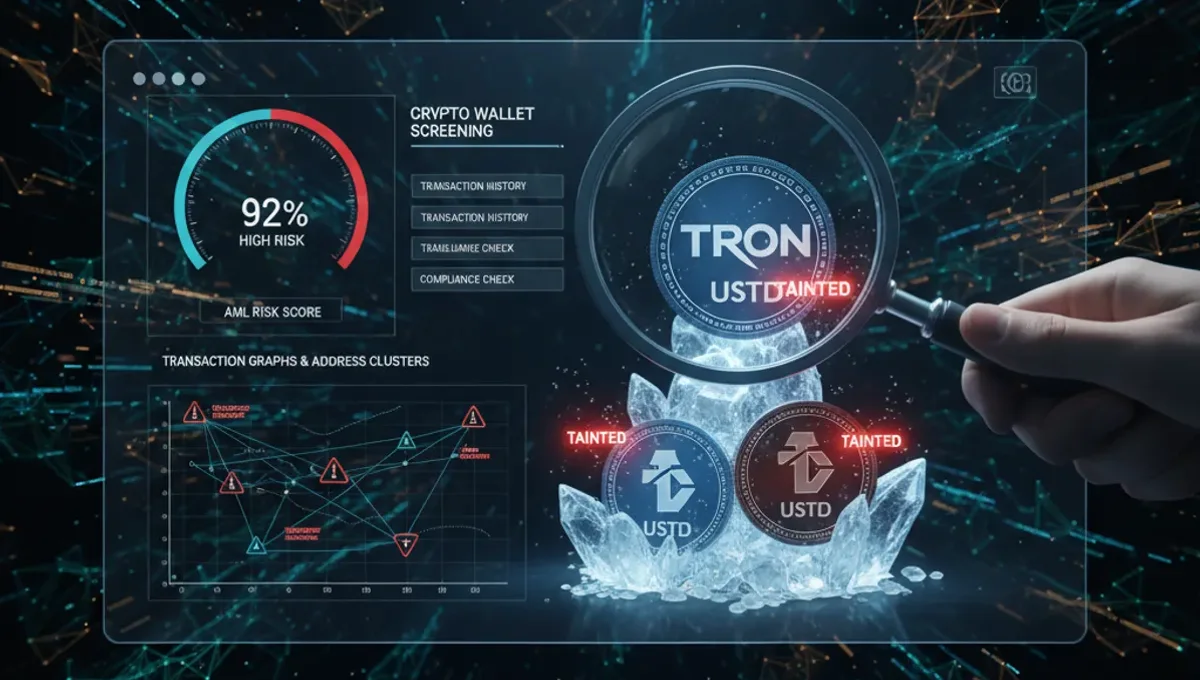
Crypto wallet screening compares an address against multiple data sources: OFAC lists, other government sanctions lists (EU, UN, UK), and blockchain analytics databases that track high-risk activity. When you screen a wallet, the service checks if the address or its historical transactions link to known sanctioned entities, darknet markets, theft, or mixing services. Fake crypto wallet screening—checking addresses that appear legitimate but belong to scammers—is also part of the process; analytics firms flag wallets with sudden large inflows from theft or ransomware. The screening returns a risk score and flags specific concerns: sanctioned entity match, darknet exposure, stolen funds, or mixer involvement. Most crypto wallet screening tools provide a confidence level for each match, since blockchain addresses can be reused or misattributed. The process is fast (seconds) and can be automated for every transaction, making it practical for exchanges and high-volume traders.
What Risk Categories Does Sanctions Screening Detect?
Sanctions screening detects several overlapping risk categories. Sanctioned entities include individuals and organizations on OFAC, EU, or UN lists. Darknet exposure flags wallets that have received funds from known dark web markets or mixing services. Stolen funds are identified when a wallet receives proceeds from confirmed theft or ransomware attacks. Gambling and scam activity marks wallets linked to Ponzi schemes, rug pulls, or unlicensed gambling platforms. Mixer involvement indicates the address has sent or received funds through privacy mixers, which obscure transaction history. Sanctions screening also catches sanctions evasion attempts—for example, when a wallet tries to circumvent restrictions by using intermediaries or layering transactions. A single wallet may have multiple risk flags; the screening tool assigns an overall risk score (low, medium, high, critical) based on the combination and recency of flags. Understanding these categories helps you decide whether to proceed with a transaction or reject it.
How to Check a Crypto Address Before Receiving Funds
Before accepting USDT, BTC, or TRX from a counterparty, follow these steps. First, obtain the sending wallet address and run it through a crypto wallet screening tool. Check the risk score: low or green typically means acceptable, while high or red indicates sanctions, darknet, or theft flags. Review the specific flags—if the address is on an OFAC list, reject the transaction. If it shows darknet or mixer exposure but no sanctions match, assess your risk tolerance; many businesses reject any medium-risk or higher. Third, verify the address format is correct (no typos or fake lookalikes). Fourth, if you are an exchange or custodian, log the screening result for compliance records. Fifth, if the risk is acceptable, proceed with the transaction and monitor the incoming address for future activity. For high-value transfers, consider running a second screening with a different provider to confirm. Our curated list of verified AML services on this site includes tools designed for this exact workflow—checking wallets through trusted services is the safest starting point for compliance.
What Risk Score Levels Mean and When to Reject Transfers
Risk scores typically range from 0 (very low) to 100 (very high) or use color codes (green, yellow, orange, red). A score of 0–20 (green) indicates minimal sanctions or theft risk; most exchanges accept these without hesitation. A score of 21–50 (yellow) suggests some exposure to mixers, gambling, or unconfirmed risk; many businesses accept this with additional monitoring. A score of 51–80 (orange) flags significant darknet, theft, or sanctions evasion signals; most regulated entities reject or escalate for manual review. A score of 81–100 (red) indicates confirmed OFAC match, sanctioned entity, or recent major theft; reject immediately. However, risk thresholds vary by business type and jurisdiction. A retail exchange might reject anything above 30, while a peer-to-peer platform might accept up to 60. If your coins are flagged as dirty or tainted, the receiving exchange may freeze your account pending investigation. Document your screening decision and the risk score for audit trails; this demonstrates good-faith compliance effort even if a transaction later proves problematic.
Sanctions Screening vs. AML Checks: What's the Difference?
Sanctions screening and AML (Anti-Money Laundering) checks are related but distinct. Sanctions screening specifically checks whether an entity or address matches government watchlists (OFAC, EU, UN). AML checks are broader and include sanctions screening plus additional analysis: source of funds verification, transaction pattern analysis, customer identity verification (KYC), and detection of structuring or layering. An AML check might flag a wallet because its transaction history shows rapid movement between multiple addresses (layering), even if no single address is sanctioned. Sanctions screening is faster and more binary—either a match exists or it doesn't. AML checks require more context and judgment. For crypto compliance, most exchanges perform both: sanctions screening at every transaction and periodic AML reviews of customer accounts. When choosing a service, clarify whether you need sanctions screening only (faster, cheaper) or full AML analysis (more thorough, higher cost). Our AML services directory lists providers offering both, so you can select the right tool for your compliance needs.
Frequently asked questions
What is OFAC sanctions screening and why does it matter for crypto?
OFAC sanctions screening checks whether a wallet or entity appears on the U.S. Office of Foreign Assets Control's Specially Designated Nationals list. It matters for crypto because receiving or sending funds to a sanctioned address can trigger account freezes, regulatory penalties, and legal liability. Most exchanges and custodians are required to screen transactions before processing them.
How do I know if a crypto wallet is sanctioned or tainted?
Use a crypto wallet screening tool to check the address against OFAC lists and blockchain analytics databases. The tool returns a risk score and specific flags: sanctioned entity match, darknet exposure, stolen funds, or mixer involvement. A red or high-risk score indicates the wallet should be rejected. Green or low-risk scores are generally safe to receive from.
What happens if I receive funds from a sanctioned wallet?
If you receive funds from a sanctioned address, your exchange account may be frozen pending investigation. The exchange must report the transaction to OFAC and may file a Suspicious Activity Report (SAR). You could face civil penalties or account closure. Always screen incoming addresses before accepting transfers, especially for large amounts.
Can I use fake crypto wallet screening to detect scams?
Yes. Fake crypto wallet screening tools flag wallets linked to scams, rug pulls, and Ponzi schemes by analyzing transaction history and known scam addresses. This is separate from sanctions screening but often included in comprehensive AML checks. A wallet flagged for scam activity should be avoided even if it's not sanctioned.
What's the difference between sanctions screening and AML checks?
Sanctions screening checks if an address matches government watchlists like OFAC. AML checks are broader and include sanctions screening plus source-of-funds verification, transaction pattern analysis, and customer identity checks. For crypto compliance, most exchanges perform both. Choose sanctions screening for speed; choose full AML for comprehensive risk assessment.